
What is an IBAN example?
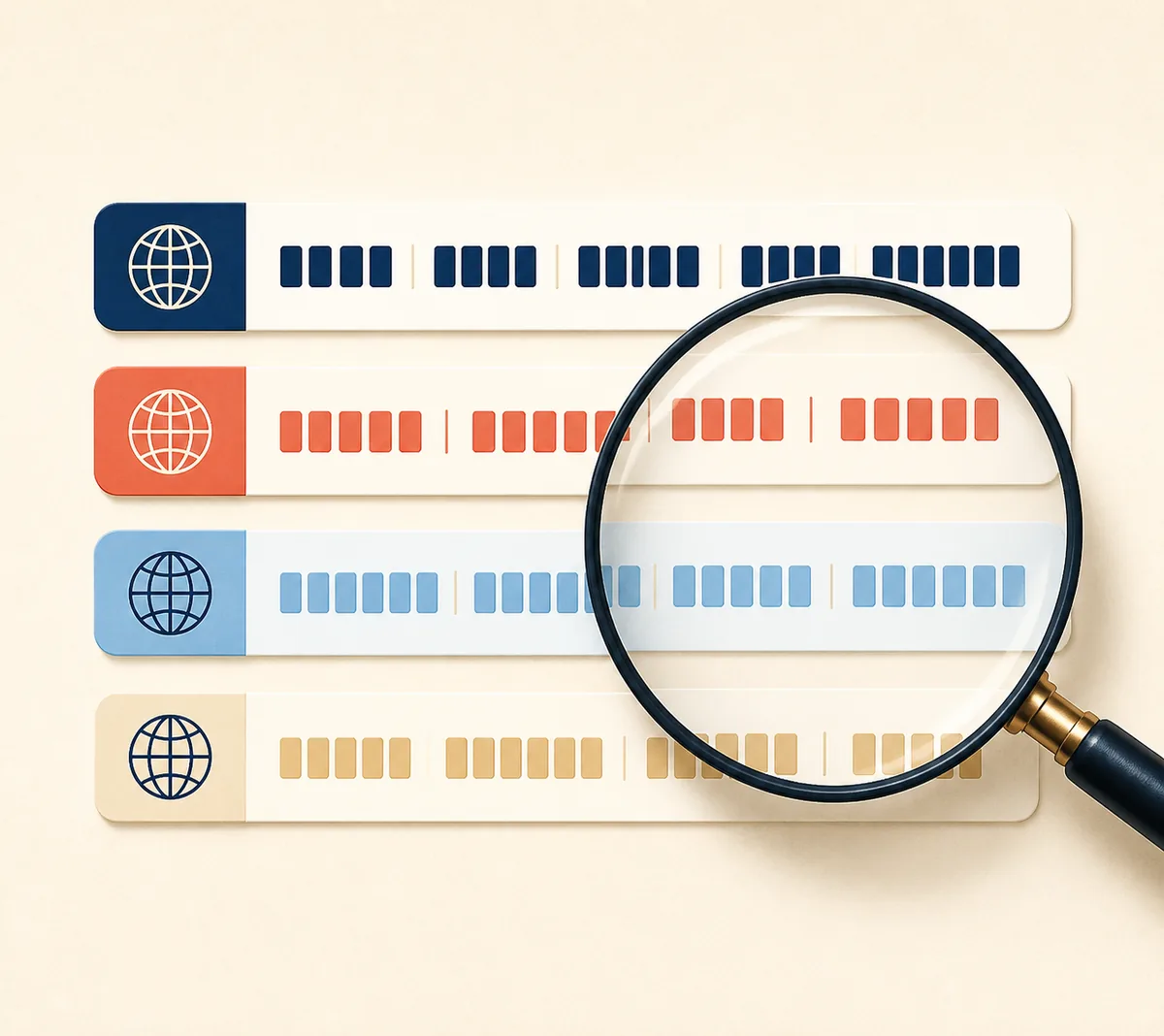
An IBAN example is a sample number used to explain a country format, test a payment field, or document a software fixture. The examples on this page are synthetic and are not bank-issued payment details.
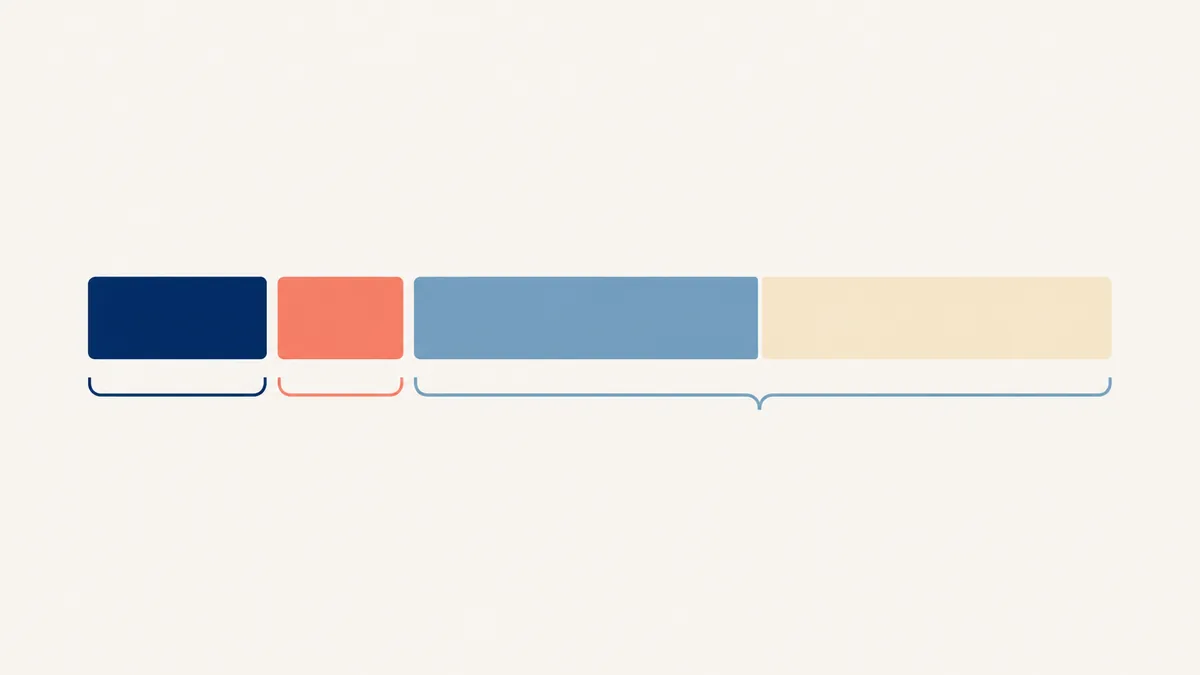
Read the first two letters as the country code, the next two digits as international check digits, and the remaining characters as the country-specific BBAN.
Different countries use different lengths and BBAN fields. Compare the print and electronic forms, and use the checker for mathematical format testing rather than account verification.
Quick answer: what an IBAN example means
An IBAN example is a readable sample that demonstrates the layout of an International Bank Account Number. It normally starts with a two-letter country code, followed by two international check digits, and then a country-specific Basic Bank Account Number, or BBAN. The BBAN is where bank, branch, account, and domestic-check fields vary.
A useful example teaches the pattern without pretending to be payment information. The four values on this page are synthetic test strings generated to illustrate length and checksum behavior. They are not assigned to a customer, do not prove that a bank or account exists, and should never be copied into a transfer form.
- Use an example to understand a format or document a test case.
- Use a bank-issued value when you need to receive or send money.
- Use a checker for structure and MOD-97 consistency, not for ownership verification.
Four synthetic IBAN examples by country
The table uses deliberately synthetic BBAN values. Germany and France use numeric BBAN characters in these examples, while the United Kingdom and the Netherlands show alphabetic bank identifiers. The values pass the mathematical MOD-97 check used by this site's browser tools, but that result is only a format signal.
Print spacing is included because people often search for an IBAN number example after seeing a grouped value on a statement. The electronic form removes those spaces. Always follow the receiving bank's input instructions rather than assuming a printed presentation is the stored value.
- The word TEST in two examples is a visual cue that the value is synthetic.
- Zeros are used as neutral placeholders, not as a claim about a bank's account numbering.
- A country code and correct length do not establish a real bank assignment.
| Country | Print example | Electronic example | Length | What it demonstrates |
|---|---|---|---|---|
| Germany (DE) | DE36 0000 0000 0000 0000 00 | DE36000000000000000000 | 22 | Numeric bank-code and account-field shape |
| United Kingdom (GB) | GB75 TEST 0000 0000 0000 01 | GB75TEST00000000000001 | 22 | Alphabetic bank identifier, sort code, and account field |
| France (FR) | FR76 0000 0000 0000 0000 0000 000 | FR7600000000000000000000000 | 27 | Bank, branch, account, and national-key positions |
| Netherlands (NL) | NL96 TEST 0000 0000 00 | NL96TEST0000000000 | 18 | Four-letter bank identifier and account field |
How to read an IBAN example
Start from the left. The first two characters identify the registered country format. The next two digits are international check digits used by the MOD-97-10 procedure. Everything after those four characters belongs to the national BBAN. A decoder can display those visible pieces, but it cannot infer an account holder or a bank's current directory status from the string alone.
For example, the synthetic German value begins with DE36 and then continues with an 18-character BBAN. The synthetic UK value begins with GB75 and contains letters in its bank-identifier positions. Those differences are why a single universal mask is unsafe. Select the country rule first, then check the corresponding length and allowed character classes.
- Identify the countryRead the two-letter prefix and compare it with the country rule being tested.
- Separate the check digitsTreat the two digits after the country code as the international checksum fields.
- Read the BBANInterpret the remaining characters using that country's bank, branch, account, and domestic-field layout.
- Check the boundaryRemember that structural validity is not proof of an assigned or reachable account.
Why an IBAN format example changes by country
IBAN standardization does not make every national account structure identical. The shared outer layer makes international communication easier, while each registered country keeps its own BBAN length, character rules, and field boundaries. That is why a UK and German IBAN can both contain 22 characters while looking different internally.
The country directory is the right place to compare registered lengths and broad patterns. The IBAN Decoder is better when you already have a complete string and want to see its visible pieces. Do not turn the examples in this article into a name-based lookup or a way to invent payment details.
| Question | What an example can show | What it cannot prove |
|---|---|---|
| Does the length fit? | Whether the string matches the country's fixed character count. | That a bank issued it or the account is open. |
| Are the characters in the right places? | Whether broad numeric or alphanumeric rules are followed. | That a particular branch or account number is assigned. |
| Does MOD-97 pass? | Whether the international checksum calculation is mathematically consistent. | Ownership, beneficiary identity, sanctions status, or payment reachability. |
| Does the print layout look familiar? | How spaces group characters for human reading. | Which value a bank wants for a specific payment form. |
Print format vs electronic IBAN format
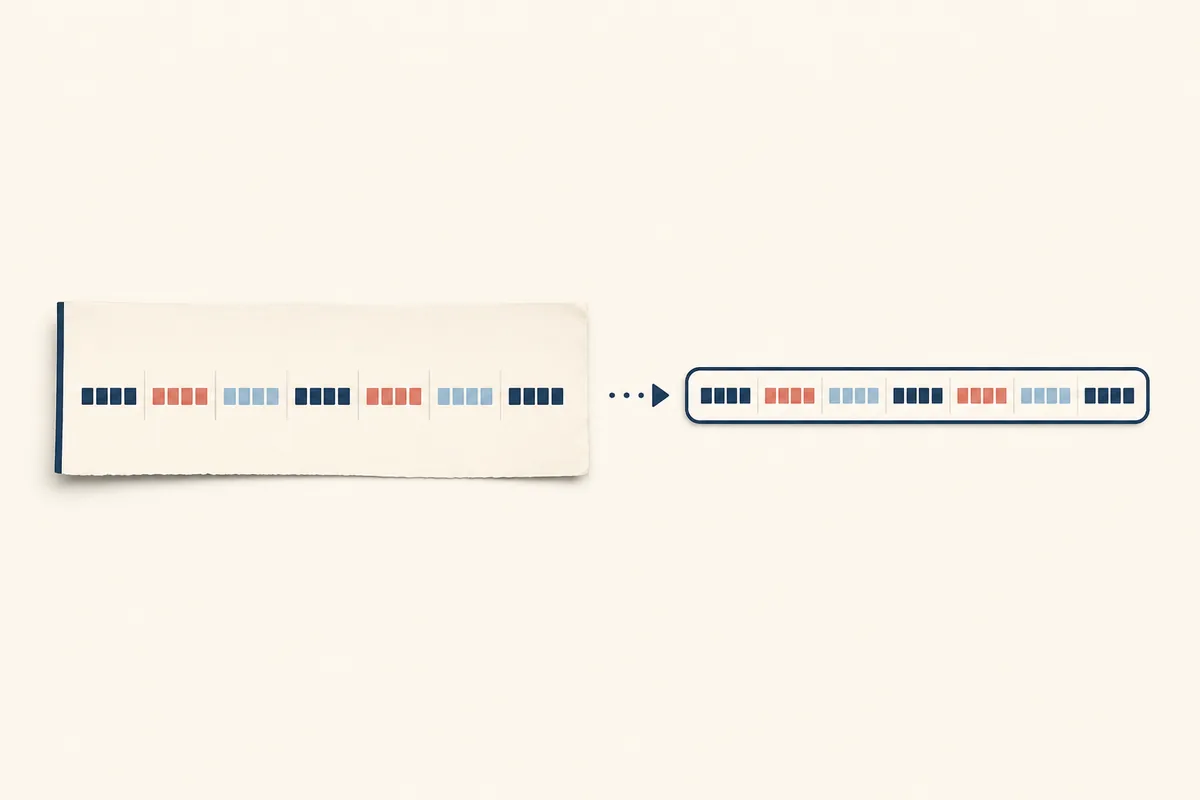
A printed IBAN often groups characters in blocks of four so a person can read or compare the value more easily. An electronic field normally expects the same characters without spaces. Removing presentation spaces does not change the underlying IBAN, but deleting or adding a character does.
When copying from a PDF or statement, compare the first and last characters after normalization. If a form rejects the value, check whether it expects spaces, no spaces, uppercase letters, or a specific country format. The IBAN Checker can help find length, character-pattern, and checksum problems locally in the browser.
- Keep the originalRetain the bank-issued presentation before removing display spaces for a form.
- Normalize only presentationRemove spaces or punctuation only when the receiving field requires the electronic form.
- Compare boundariesCheck the prefix, final characters, account name, and selected currency before sending.
- Confirm important paymentsUse a trusted second channel when payment instructions arrive by email or chat.
An IBAN example is not a real bank account
A checksum-valid example can still be unassigned, inactive, or unsuitable for a payment. Mathematical validity says that the characters fit a registered pattern and that the MOD-97 calculation returns the expected result. It does not query a bank, confirm a beneficiary, or prove that funds can reach the account.
This distinction matters because searchers sometimes ask for a valid IBAN example and then paste it into a real transfer. Treat every sample on this page as documentation or test data. For your own account, retrieve the value from a current statement, authenticated online banking, a mobile banking app, or the bank itself; the IBAN lookup guide explains those safer sources.
- Do not use a public example for payroll, direct debit, invoices, refunds, or international transfers.
- Do not infer an IBAN from a person's name, card number, or a partial local account number.
- Do not describe a checksum pass as proof of ownership, account existence, or payment success.
- If you need synthetic fixtures, isolate them from production payment flows and label them as test data.
When an IBAN example is useful
Examples are helpful for form design, QA cases, documentation, training, screenshots, and regression tests. A good test set includes more than one country: include a short format such as the Netherlands, a longer format such as France, numeric and alphabetic BBAN characters, print spacing, lowercase input, an altered check digit, and values that are one character too short or too long.
For development workflows, the site's IBAN Calculator can calculate check digits from a complete supported BBAN, while the Bulk IBAN Generator can create synthetic rows for QA. These tools are intentionally browser-based and should remain separate from real customer payment data.
- Documentation: show the country pattern before explaining field validation.
- QA: test normalization, length, allowed characters, and checksum errors separately.
- Training: explain why an IBAN is different from a local account number or SWIFT/BIC.
- Production: obtain current account details from the bank or account holder instead of a public example.
IBAN Example FAQ
What is an example IBAN number?
It is a sample string used to explain an IBAN's country code, check digits, BBAN, length, and presentation. The examples on this page are synthetic and are not payment instructions.
Can I use an IBAN example to make a transfer?
No. Use the exact bank-issued IBAN for the intended account. A checksum-valid example does not prove that an account exists, belongs to a person, or can receive funds.
Why do IBAN examples have different lengths?
Each registered country keeps its own BBAN layout and fixed length. The common country-code and check-digit opening does not make the national fields identical.
Is the DE36 zero-filled value a real account?
No. It is a deliberately synthetic value for explaining the German character shape and MOD-97 behavior. It should not be used for payment or ownership claims.
Should spaces be removed from an IBAN example?
Print spaces are usually presentation only. Remove them only when the electronic field expects a compact value, and do not remove or add actual characters.
Can a checker prove that an example belongs to a bank?
No. A checker can inspect registered structure and mathematical checksum rules. It does not verify bank assignment, account status, ownership, sanctions, or payment reachability.
Can I use an IBAN example for a real transfer?
No. Use the exact IBAN supplied by the bank or account holder. A synthetic example may pass a checksum while being unassigned, inactive, or unsuitable for payment.
Why do IBAN examples have different lengths?
Each participating country keeps its own BBAN structure and fixed length. The shared country-code and check-digit prefix does not make the national fields identical.
Bottom line
The best IBAN example is one that explains a country-specific format while clearly saying that it is synthetic. Read the country prefix, separate the international check digits, inspect the BBAN, and compare the registered length and character pattern.
Use examples for learning and testing. Use the IBAN supplied by the correct bank or account holder for any real payment, and use the site's Checker, Decoder, Countries directory, or generator tools only for the task each tool is designed to support.
Official format references
- Swift IBAN Registry — Current country-level IBAN format and registry reference.
- ISO 13616-1 — International standard describing the elements of an IBAN.